
Travel Smarter: Avoid massive fines and towing fees with our essential guide to Spain's updated road laws.
If you are planning on driving in Spain in 2026, renting a car is absolutely the best way to explore Spain on your own terms. It gives you the freedom to find hidden beaches, visit mountain villages, and travel at your own pace without relying on train schedules. However, if you are planning a Spanish road trip in 2026, you need to update your knowledge before you get behind the wheel.
During our recent road trip along the Mediterranean coast from Valencia to Cartagena, we noticed that many international tourists were completely unaware of the new, strict traffic and environmental laws. Getting caught off guard can ruin your travel budget with sudden fines ranging from €80 to over €200.
Before you hit the road—and especially before you drive away from the rental car desk—you need to check these three critical things.
Updated Smart Logistics: Driving in Spain 2026
1. The V16 Emergency Beacon (No More Triangles)
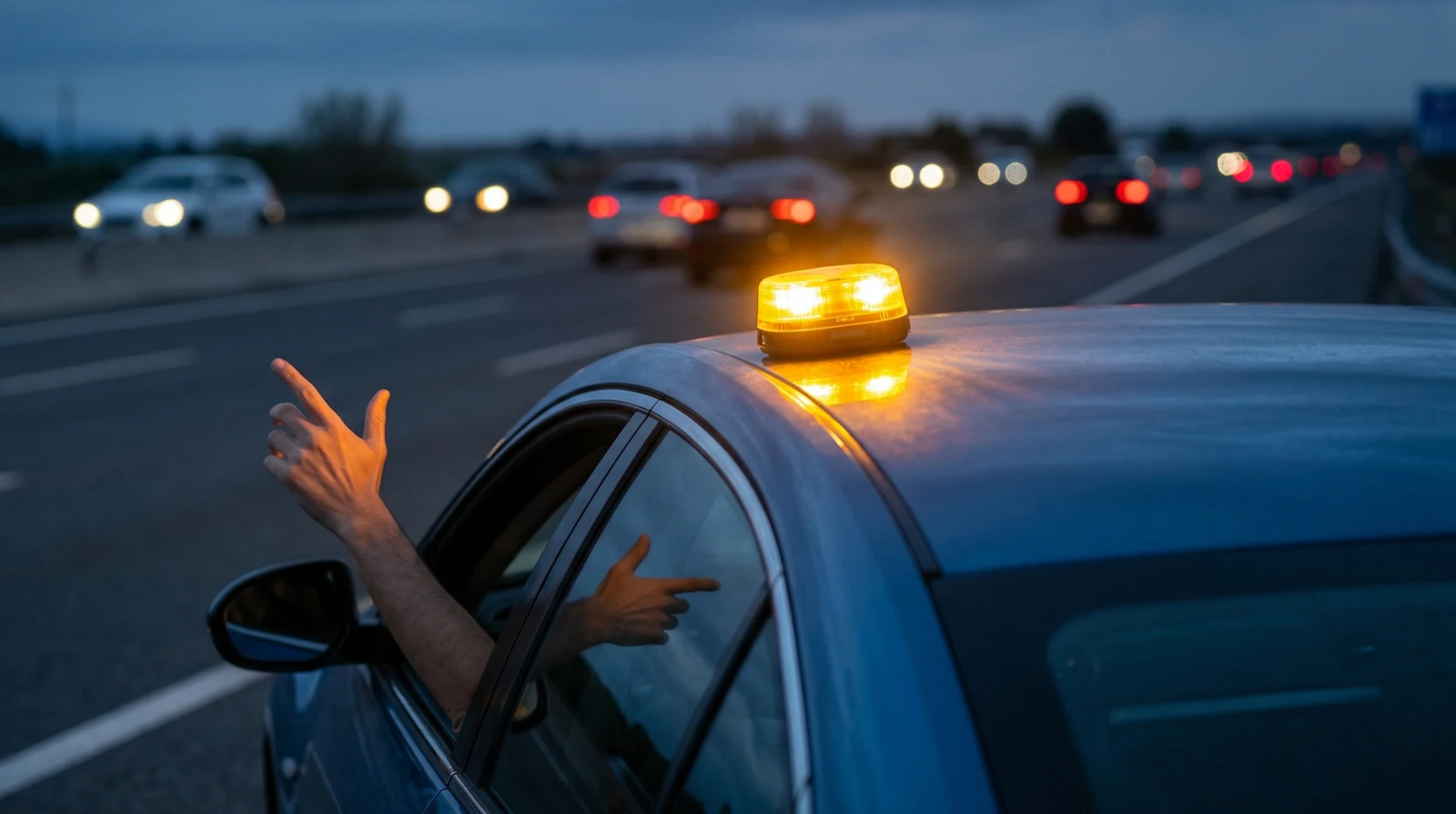
As of January 1, 2026, carrying old-school warning triangles is no longer legally sufficient in Spain. They have been officially replaced by the mandatory connected V-16 digital flashing beacon. This is a small, yellow flashing light equipped with geolocation technology that connects directly to the Spanish traffic authority (DGT 3.0) and attaches magnetically to the roof of your car.
Due to safety concerns, the law now strictly forbids stepping out of your vehicle and walking along highways or expressways to place a traditional triangle. You must signal a breakdown from safely inside your car.
When you pick up your rental car, check the glovebox immediately. If there is no connected V16 beacon inside and you break down on the highway, the police will fine you, not the rental company, for not having the mandatory safety equipment.
Our Tip: Always keep the V16 beacon inside the cabin (like in the glovebox), not in the trunk. The law requires you to be able to reach it and place it on the roof simply by rolling down your window, without stepping out into high-speed traffic.
2. Low Emission Zones (ZBE) & Eco-Stickers
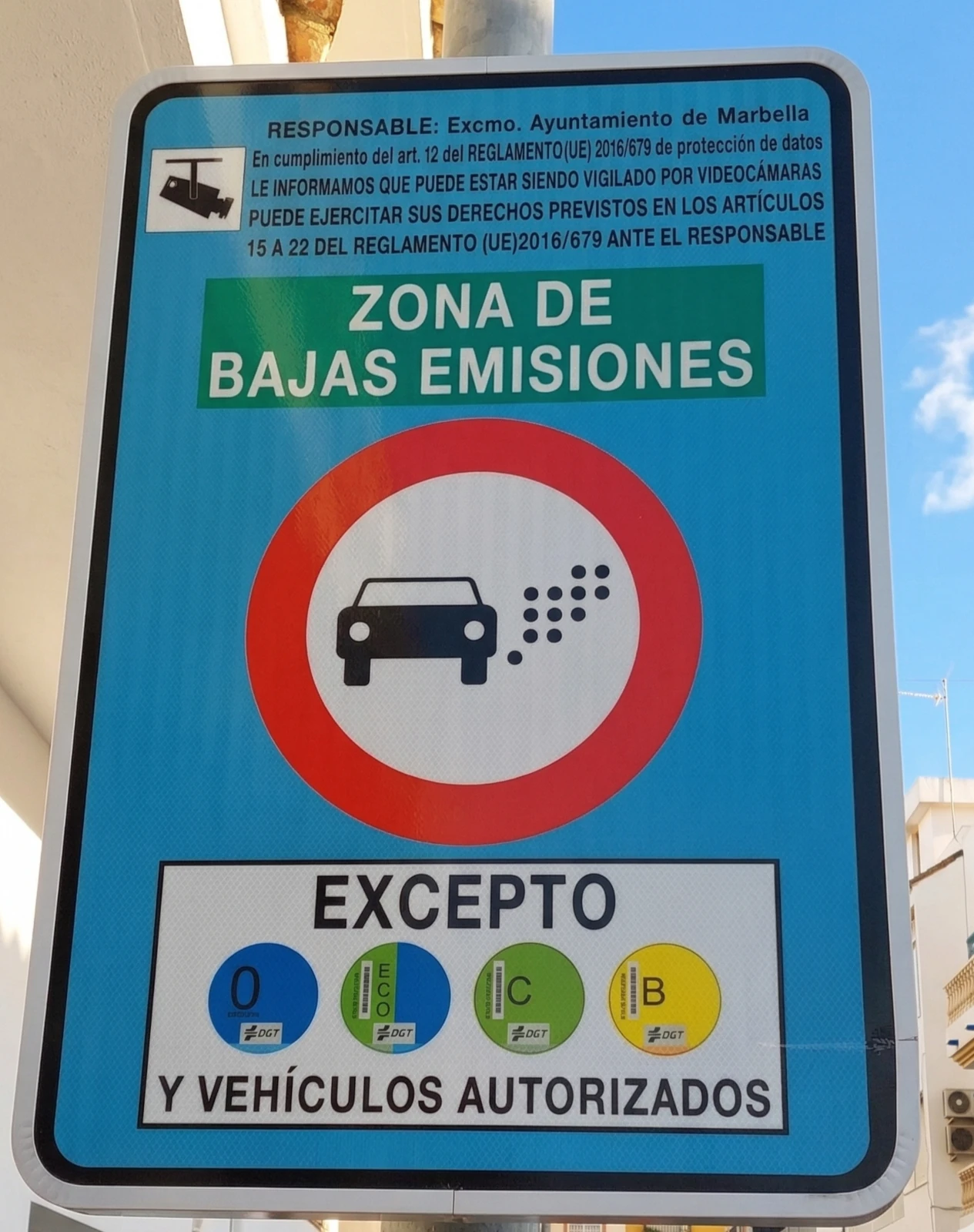
Spain is taking urban air quality very seriously. Every Spanish city with over 50,000 residents now enforces strict Low Emission Zones (Zonas de Bajas Emisiones – ZBE). This includes popular destinations like Valencia, Alicante, Benidorm, and Cartagena.
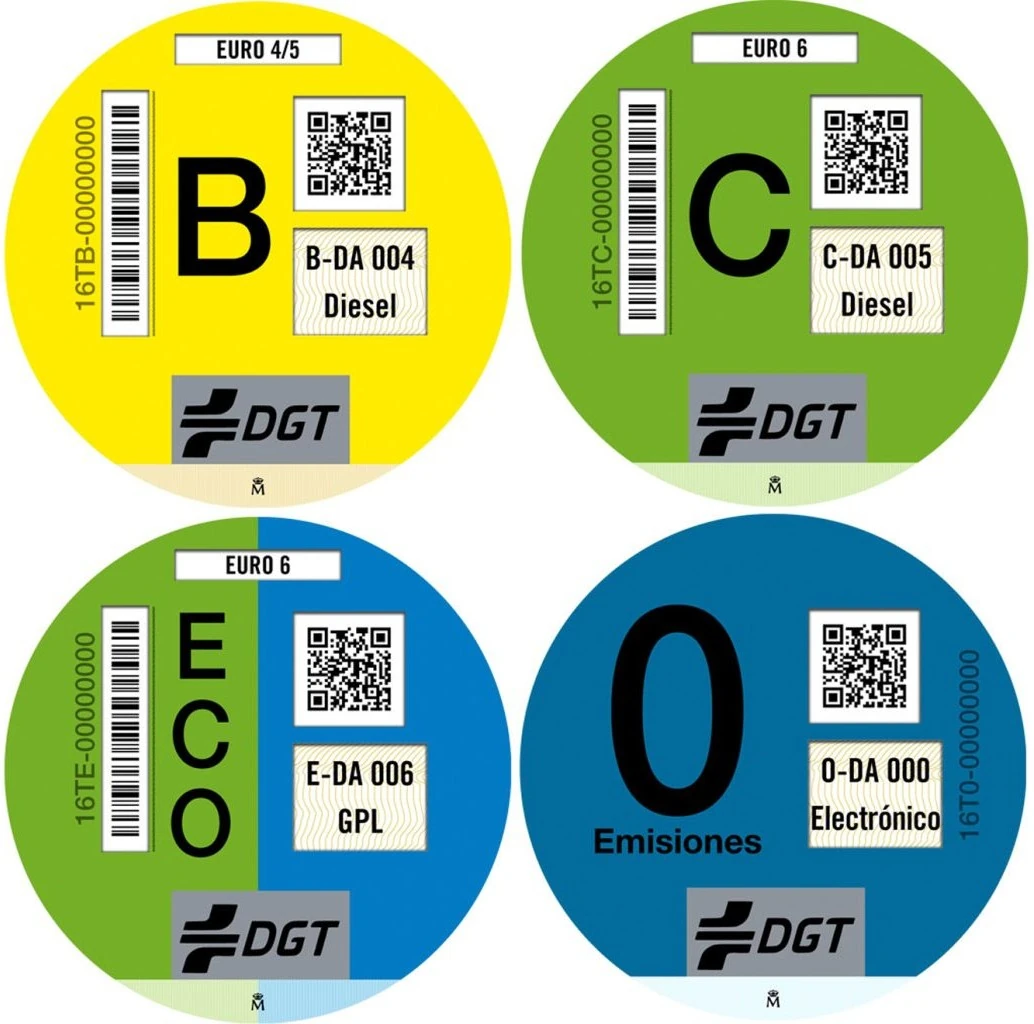
To enter these cities legally, your rental car must have a DGT environmental sticker displayed on the windshield.
A blue “0” or green-blue “ECO” sticker is perfect and gives you full access.
A green “C” sticker is usually fine, but in some cities, you can only enter the ZBE if your direct destination is a public underground parking garage.
If your rental car has a yellow “B” sticker, ask the rental desk for a different car, or you will face immediate €200 fines for entering city centers.
3. The Color of Parking
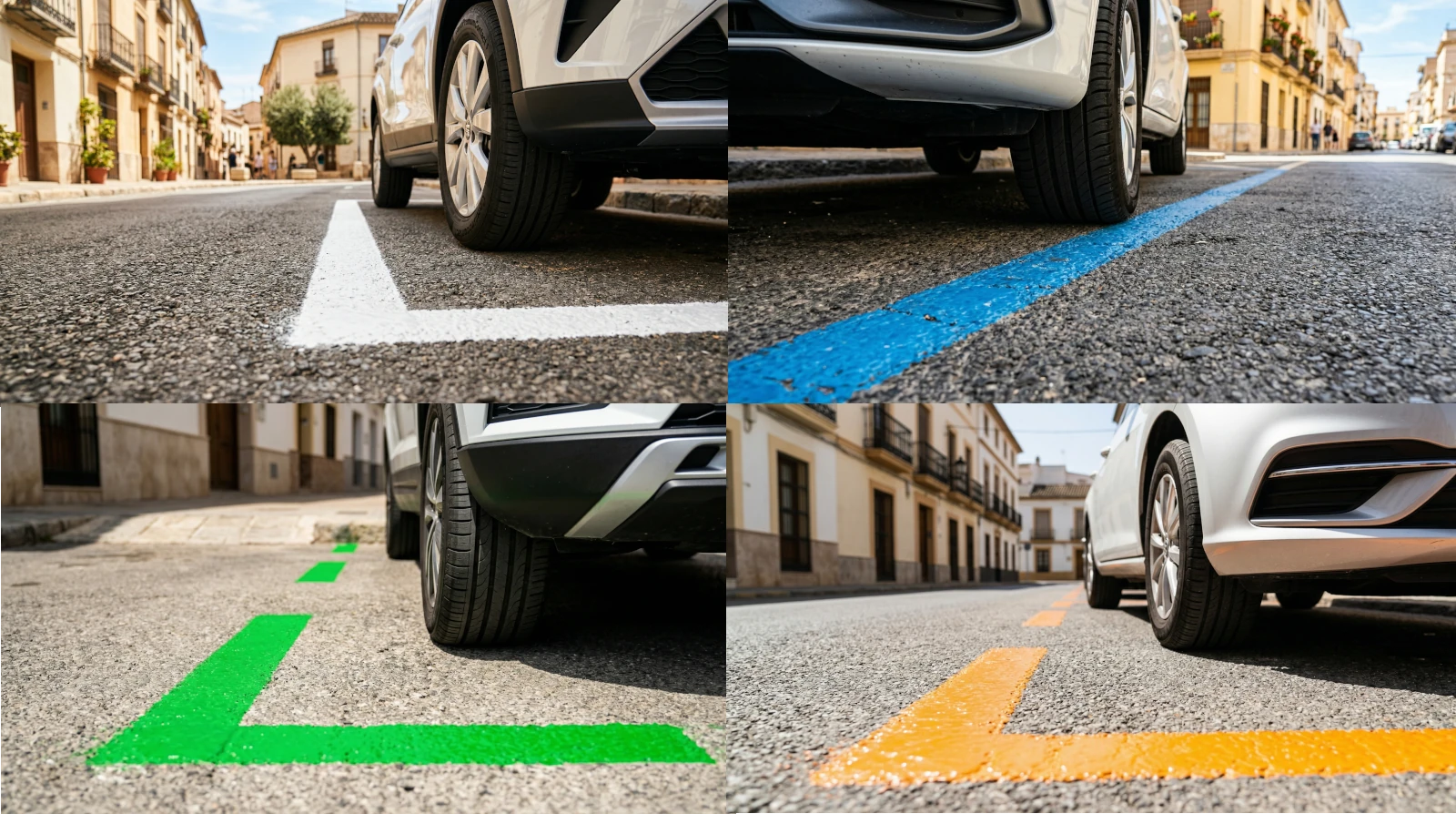
Never park blindly on a Spanish street just because you see an empty spot. Street parking is strictly regulated by colored lines painted on the asphalt. We highly recommend downloading an app like Telpark or ElParking so you can pay directly from your phone and extend your time without running back to the meter.
Pay close attention to the painted lines:
White Zones (Zona Blanca): The holy grail of parking. These are completely free with no time limits. They are harder to find in city centers, but always your best option.
Blue Zones (Zona Azul): Standard paid parking for visitors. This is where you usually want to park. It is often limited to 2 hours.
Green Zones (Zona Verde): Designed primarily for residents. Tourists can park here, but the rates are much more expensive and the time is strictly limited (often to just 1 hour).
Orange Zones (Zona Naranja): Strictly for residents only. If you park your rental car here, it will be towed away immediately.
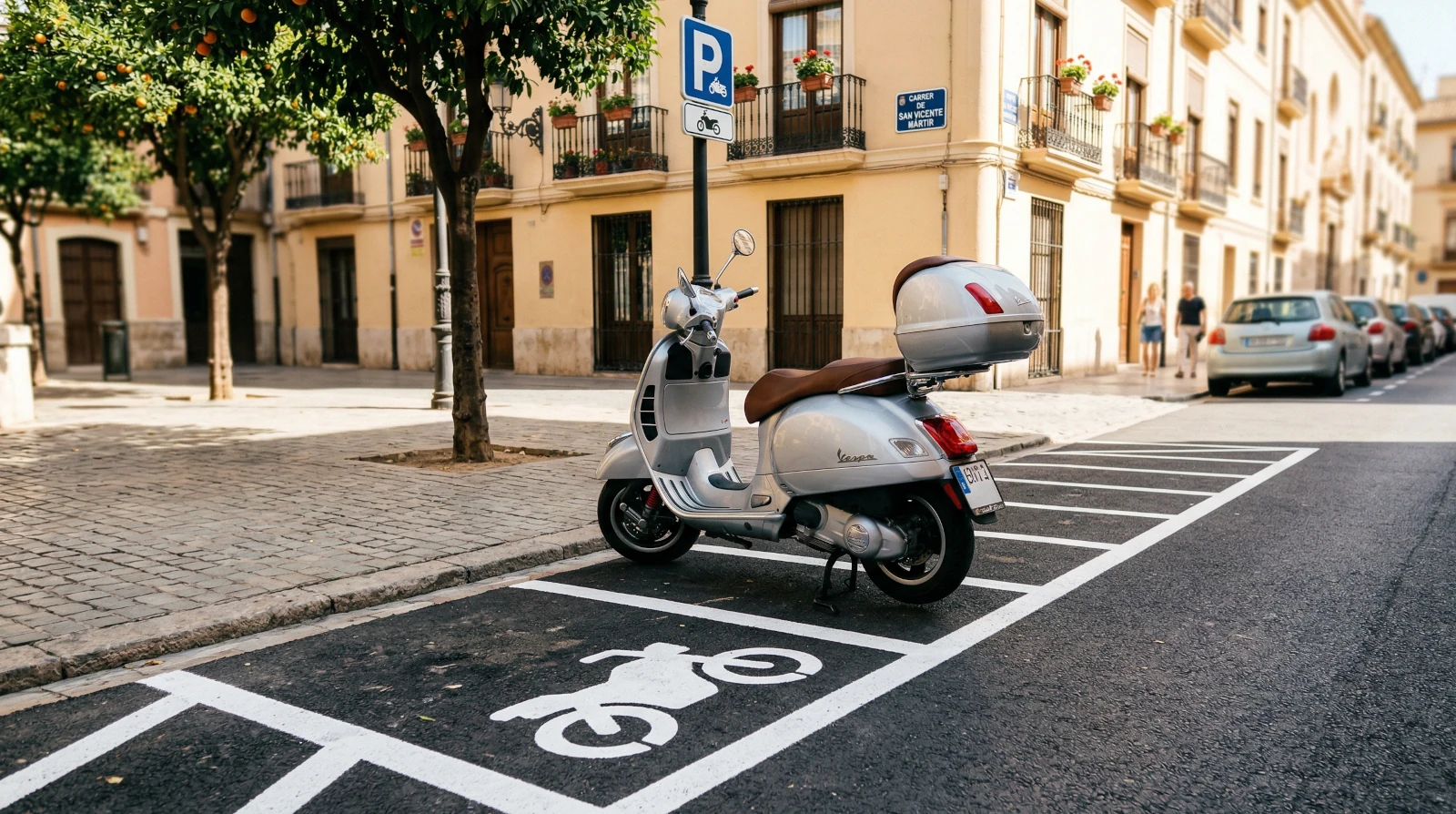
Motorcycle Zones: If you decide to rent a scooter to beat the city traffic, look for specific areas marked with white triangles or motorcycle icons, usually at the ends of streets. Parking a scooter in a standard car spot can sometimes result in a fine, so always use these dedicated (and almost always free) two-wheeler zones.
Our Tip: Always check the local signs nearby. In many Spanish towns, the paid Blue Zones become completely free during the midday siesta (usually between 2:00 PM and 4:00 PM) and on Sundays.
Plan Your Next Adventure: Explore our Atlas
Now that you know how to drive safely and legally, it is time to plan the perfect route. You’ll find plenty of inspiration in our dedicated destination hubs.
Check out our full [10-Day Valencia to Cartagena Road Trip] for the ultimate Spanish itinerary, or browse our [Destinations Catalog] to find your next unforgettable adventure. Looking for more logistical hacks? Visit our [Practical Travel Tips] section.
Official Tourism & Traffic Portal:
For the latest ZBE zone updates and official traffic regulations, check the [Official Spain Traffic] website.