
Travel Smarter: Forget the "cheap Europe" myths. Here is your battle-tested 4x4 survival guide to experiencing the real value, wild roads, and hidden beaches of Albania.
For years, social media has branded Albania as the “cheapest secret in Europe.” But if you are planning an Albania road trip itinerary in 2026, it is time for a reality check. The secret is out, prices on the coast have adjusted, and the country is rapidly transforming.
Yet, Albania remains one of the most breathtaking, culturally rich, and authentic destinations in the Mediterranean—offering an unbeatable value for money that places like Italy or Greece simply cannot match anymore.
To explore it properly, you need the right strategy. We spent 7 days driving from the historical heart of the country down to the rugged Albanian Riviera in a Jeep Renegade. From navigating GPS dead-zones and surviving highway crashes to finding the absolute best hidden beaches, here is our definitive definitive 7-day Albania road trip itinerary and travel guide 2026.
Your 7-Day Albania Road Trip Blueprint
Table of Content:
- The “Comfort Adventurer” Survival Guide
- Day 1: Berat – The City of a Thousand Windows
- Day 2: The Epic Off-Road Route to Gjirokastër
- Day 3: Springs, Ruins, and the Ksamil Reality Check
- Day 4: The High-Clearance Triumph on the Riviera
- Day 5: From Coastal Clouds to Mountain Vistas
- Day 6: Shkodra & The Friday Traffic Hack
- Day 7: Tirana – Brutalizm, Kapitalizm & Finale
- Plan Your Next Adventure: Explore our Atlas
- Map
The "Comfort Adventurer" Survival Guide
Before we dive into the day-by-day itinerary, we need to talk logistics. Is driving in Albania safe? Yes, but it is wildly unpredictable. Here is the unvarnished truth you need to know before you rent a car at Tirana airport.
- The Crash & Why You Need a High-Clearance Vehicle
We highly recommend renting an SUV or a crossover. Why? Because it literally saved our vacation on Day 1. Shortly after picking up our Jeep Renegade, we hit a massive traffic jam on the expressway heading toward Durrës. We managed to brake in time, but the driver behind us (in a VW Golf) did not.He rear-ended us hard. Thankfully, no one was hurt. But here is the “Smart Travel” lesson: because our Jeep had a much higher ground clearance, the impact only scratched our bumper and cracked a tiny plastic clip. We drove away. The lower VW Golf had a completely crushed hood and likely needed a tow truck.
DRIVER’S NOTE (Insurance): Always buy full insurance (Zero Excess) when booking your car. Because we were fully covered, we didn’t pay a single cent for the bumper damage, and it didn’t ruin our trip.
The Driving Reality (Turtles & 0.00 BAC)
Driving here is an adventure. Do not trust Google Maps or Waze blindly—they frequently tried to route us through non-existent dirt paths. Furthermore, speed limits can be baffling; you might be on a brand-new, empty asphalt road and suddenly see a 20 km/h speed limit sign.
Expect the unexpected: cows, sheep, donkeys, and even wild turtles randomly crossing mountain roads.LEGAL WARNING (The 0.00 BAC Reality Check): Officially, Albania has a strict 0.00% Blood Alcohol Concentration (BAC) limit. Technically, even half a glass of wine with your lunch is illegal if you are driving. However, the reality on the ground is a bit different. During our entire week, we barely saw any police stops (they mostly focused on speed cameras), and even when the police arrived at our minor highway crash, they didn’t breathalyze anyone. A local waiter even laughed and told us that many locals don’t take the rule seriously at all. Still, as a tourist in a rental car, we highly recommend playing it smart and sticking to zero.
The Grocery Trap (The €16 Ice Cream)
You might think cooking your own food is cheaper, but restaurants in Albania are often more affordable than supermarkets, especially for imported goods. We learned this the hard way: we grabbed a bucket of ice cream without a price tag from a local market. At the register, it scanned for 1650 LEK (approx. €16!). Eat at local tavernas—it is cheaper, fresher, and vastly superior.Money in Albania: The “No-Fee” Strategy & The EUR Payment Trap
While major hotels and modern gas stations accept cards, Albania is still largely a cash-based society. You will absolutely need physical cash for smaller bakeries, local takeaways, castle entrances, and independent guesthouses.
The “Euro Payment” Trap
Many vendors will happily accept Euros if you run out of local currency (LEK), but be warned: the math is almost never in your favor. With an exchange rate hovering around 95 LEK = 1 EUR, local merchants usually apply a flat “street rate” of 100 LEK = 1 EUR. You might think losing 5 LEK per Euro is nothing, but over a 7-day road trip, that “hidden fee” adds up quickly—enough to cover several coffees or extra snacks. Always stick to the local currency (LEK) and don’t be surprised if you pay in Euros but receive your change in LEK.ATM Fees & The “Withdraw Big” Strategy
Finding a no-fee ATM in Albania is effectively impossible. During our trip, we tested various machines, and the cheapest we could find was Credins Bank, which charges a flat fee of 600 LEK per withdrawal.- The Smart Hack: Since you are paying a flat fee regardless of the amount, stop making small withdrawals. Calculate your estimated needs for the next few days and withdraw one large lump sum to minimize those repetitive bank charges. We found a very convenient, standalone Credins ATM on the main promenade in Berat, but they are common throughout most cities.
- Our Tip: Keep at least one physical VISA card as a backup. While card acceptance is growing, some smaller terminals or older ATMs may still reject your primary Mastercard, and you don’t want to be stranded without cash in a remote mountain town.
Health, Water & Footwear Essentials
The Water Debate: To Drink or Not to Drink?
In most of Albania, the tap water is officially considered unsafe for consumption. In many regions, you should rely strictly on bottled water—even for brushing your teeth or rinsing your mouth. Getting a stomach bug on a road trip is the fastest way to ruin your vacation, and given the low cost of water here, it’s not worth the risk.- The “Hostel Hack”: We did find exceptions. In some local spots, like a backpacker hostel we stayed at in Berat, the staff explicitly told us the tap water was clean and encouraged refilling bottles directly from the tap. We tried it, and it was perfectly fine. However, this is NOT a universal rule. If you aren’t 100% sure, stick to the bottle.
- Budget Hack: Don’t buy tiny 0.5L bottles at tourist kiosks. You will save a small fortune (and reduce plastic waste) by buying large 10-liter water jugs at local supermarkets. We paid around 120 LEK for a 10-liter jug—for that price, it’s not worth risking “stomach issues” by drinking tap water of questionable quality.
Footwear: No Flip-Flops Allowed
The Albanian landscape is punishing for your feet. You will be climbing steep, slippery cobblestone streets in ancient castles, trekking up rocky paths to viewpoints, and walking on rugged pebble beaches.- The Fix: Pack sturdy, thick-soled walking shoes or hiking sandals with excellent grip. Leave the flip-flops for the shower or the beach towel. Trying to climb the Gjirokastër fortress or the streets of Berat in thin sandals is a guaranteed way to end up with blisters or a twisted ankle on Day 1.
Our Tip: If you are planning to explore places like the Bovilla reservoir or Gjipe Beach, your shoes will get dusty and muddy. Pick a pair that is easy to clean and has high-traction soles.The 2026 Border Reality (EES & ETIAS):
Border procedures have shifted. If you are flying into the Schengen Area (like Prague), the digital EES (Entry/Exit System) is fully active, replacing physical passport stamps with biometric scans. While Albania is not in the EU, it maintains its own strict border controls. For non-EU travelers, ensure your ETIAS authorization is sorted weeks before your trip. Don’t let this catch you off guard at passport control—always check your requirements online to avoid a costly mistake at the gate.
Day 1: Berat – The City of a Thousand Windows
After landing in Tirana, dealing with our rental car, and surviving the aforementioned highway crash near Durrës, we drove straight inland to Berat (a UNESCO World Heritage site).
(Note on flights: Despite years of rumors and “coming soon” signs, the highly anticipated Vlora Airport 2026 opening has still not happened as of our June trip due to ongoing ecological controversies. You will still need to fly into Tirana).
The Castle and the Parking Maze
Our first stop was the Kalaja e Beratit (Berat Castle), a massive, still-inhabited fortress sitting high on a hill. We drove up and paid around €2-3 to park in a private lot near the top to save our legs. The views of the Tomorr mountains, the Holy Trinity Church, and the ruins of the Red Mosque are spectacular.
However, leaving the castle was a logistical nightmare. Our GPS directed us down into the city through incredibly narrow, steep, cobblestone alleys. At one point, the digital road simply vanished, and the streets were too tight to turn our Jeep around. After 15 minutes of stressful, millimeter-precise maneuvering, we finally escaped the maze.
PRO-TIP (Parking): Do not try to drive deep into the historical upper neighborhoods! Once you are done with the castle, drive straight down to the Osum River. You can easily find free parking spaces along the modern river boulevard and explore the lower city safely on foot.
Mangalem, Gorica, and the Xhiro
Once safely parked, we spent the late afternoon exploring the steep, white Ottoman houses of the Mangalem district (the Muslim quarter), before crossing the bridge to the Gorica district (the Christian quarter).
In the evening, we joined the locals for the Xhiro—a beloved Albanian tradition where the entire town comes out just before sunset to stroll slowly up and down the main pedestrian boulevard, drinking coffee and chatting. It is the perfect introduction to the Balkan “slow life.”
Our Stay: The Gorica Experience
We opted for a friendly guesthouse on the Gorica side of the river, and it turned out to be a massive “Smart Travel” win. Not only did we have a stunning view of Berat’s historic windows from our balcony, but our host confirmed that the tap water here was perfectly safe to drink—a rare luxury in Albania! We started our mornings with simple, hearty breakfasts provided by the hostel, where we discovered that trying different types of byrek (traditional savory pastries) served cold is actually a surprisingly delicious way to kickstart the day.
Logistics & First Impressions
- Arrival Strategy: We decided to have a low-pressure start. Instead of hunting for a busy restaurant immediately after our flight and the accident, we relied on our packed travel supplies and sandwiches. It was the perfect, stress-free way to settle into our accommodation.
- What to See: Kalaja (Berat Castle, entrance fee approx. 300 LEK), Mangalem, Gorica, and the evening Xhiro promenade.
Dining Strategy: Tavë Kosi (lamb baked in yogurt) or Pispili are absolute must-tries during your stay. We didn’t hunt for a restaurant on our first night, but based on our research and local recommendations, it is worth booking a table at small, family-run spots like Homemade Food Lili well in advance if you want an authentic experience later in your trip.
Day 2: The Epic Off-Road Route to the Stone City (Gjirokastër)
Many travelers stick to the standard SH4 highway (approx. 2h 45m), but we decided to take the scenic route. Leaving Berat early in the morning gave us the luxury of time to turn our drive into a 4-hour adventure.
The Off-Road Adventure
Instead of the main highway, we took a remote, deeply rural route through the mountains, passing through the tiny, isolated villages of Velabisht, Mbreshtan, Paftal, Cfir, Aranitas, and Povel, finally emerging onto the SH4 highway just past Damës.
For over an hour, we were in true off-road territory. While about 3/4 of the route was paved, that 1-hour “off-road” section was a real test of our Jeep’s clearance. It wasn’t just a commute; it was a rugged adventure that offered spectacular, untouched mountain views. If you have a high-clearance vehicle, this route is a must, but remember to stay focused on the gravel and stone-strewn climbs.
The Drive into Gjirokastër
Gjirokastër is built on extreme, steep slopes. We dared to drive up toward the castle, but it was a challenge. Some streets were blocked, and our GPS tried to lead us up one-way streets against traffic. After some tense maneuvering through narrow, twisting alleys, we managed to find a free parking spot near Restorant Kufoi.
- Our Tip: If you attempt to drive to the top, have plenty of patience and nerves of steel. If it were raining, those steep, polished stones would have been an absolute nightmare to navigate.
Exploring Gjirokastër
Gjirokastër is a “Stone City” with a heavy, monumental vibe. We spent time wandering the Old Bazaar, which is a place you should visit twice: once during the day to see the busy stalls, and again at night when the lights give the whole area a cinematic, moody atmosphere.
The Castle & The Museum Dilemma
The Gjirokastër Castle is a dark, imposing fortress that dominates the valley.
- The Ticket Hack: The entrance fee is 400 LEK per person if you pay cash at the gate. However, if you book online in advance, you can save money and pay 300 LEK by card.
- The Museum: There is an additional museum inside the castle costing an extra 200 LEK. We chose to skip it—we felt the castle walls and the incredible panoramas were more than enough, and paying 600 LEK total felt like a bit of a tourist trap given the scale of the attractions.
Fitness & Flavors
Our walk through the city—from the parking to the castle and back through the bazaar—turned out to be an incredible workout. By the end of the day, our watches showed over 100 floors climbed due to the sheer number of steep alleys and stone stairs!
For dinner, we found a local taverna and ordered Qifqi (traditional vegan rice balls with mint). They were delicious—we couldn’t quite pinpoint the mint, but the taste was perfect. We paired them with some warm, fresh byrek and a glass of robust local red wine, which felt like the only way to celebrate such an active day.
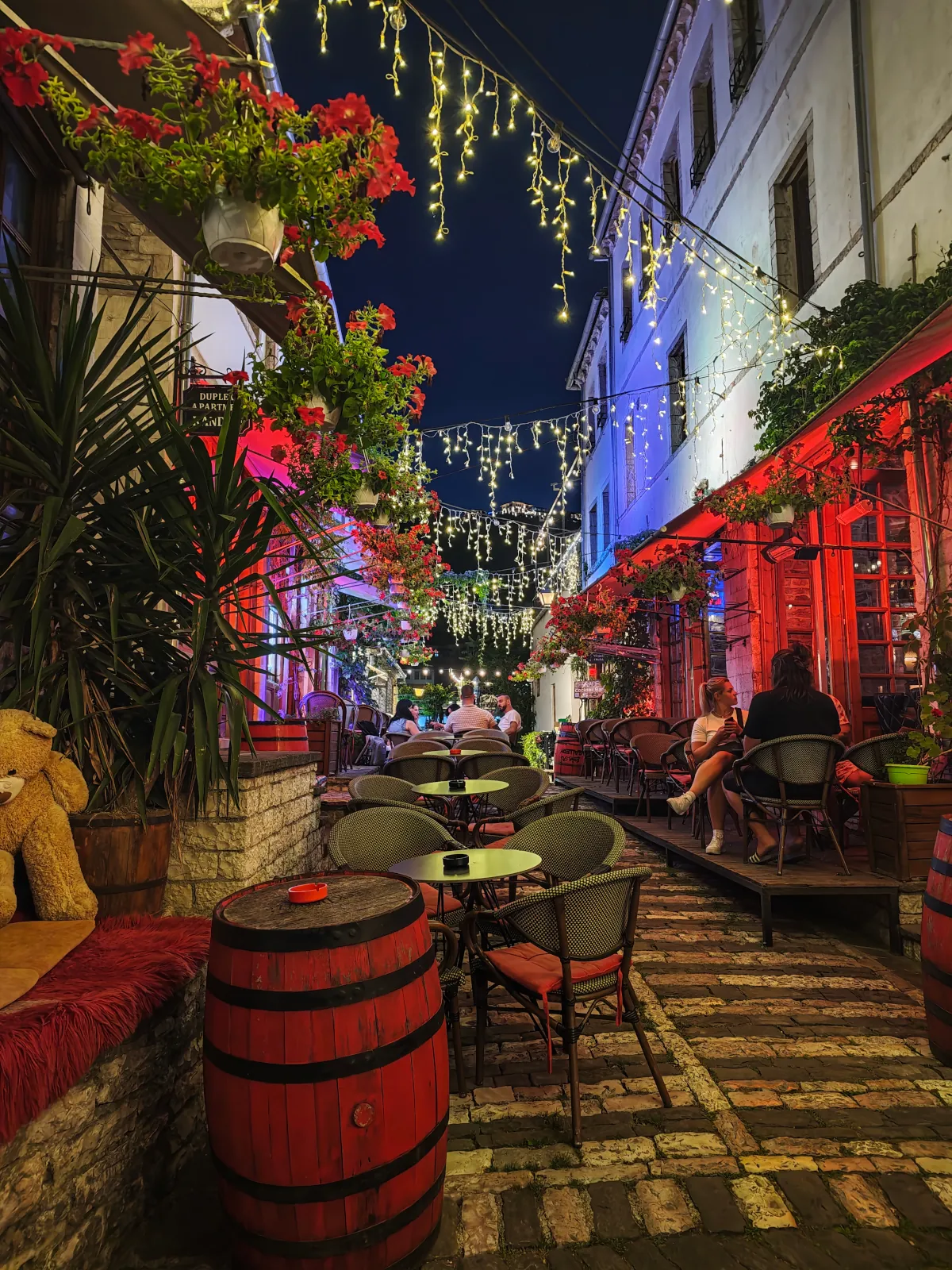
Day 3: Natural Springs, Ancient Ruins, and the Ksamil Reality Check
Today, we head to the deep south to explore some of Albania’s most famous natural and historical wonders, before driving up the spectacular coastline.
The Blue Eye (Syri i Kaltër)
About a 45-minute drive from Gjirokastër, hidden in a dense forest, is the Blue Eye Albania spring. This karst phenomenon pumps crystal-clear, freezing cold (10°C) water from a depth of at least 50 meters. The intensity of the blue color is surreal, but the real highlight for us was the thousands of stunning, bright blue dragonflies hovering over the water—a unique element of this ecosystem that most people miss while staring only at the spring.
- Logistics & Smart Hacks:
- Parking: The designated parking lot costs 300 LEK for up to 3 hours. It’s an informal setup—just pull up, pay the attendant in the booth, and head in.
- Transport: You don’t have to walk the 2km stretch. You can rent e-bikes on-site or hop on the tourist “train”—a fun, open-air tractor-train that kids and adults alike seem to enjoy.
- The “Budget” Route: We bought the tickets (50 LEK per person), but there is a path from the “other side” of the spring through the forest where we didn’t encounter any ticket checks. For the “Smart Traveler,” sticking to the main entry ensures you don’t miss any official info, but if you’re up for an adventure, you can explore the outer forest loops freely.
Butrint Archaeological Park
Continue an hour south to Butrint. This UNESCO site is a fascinating mix of ancient Greek, Roman, and Venetian ruins sinking into a lush eucalyptus forest. It offers deep shade, making it a great midday stop.
- Logistics: The parking situation is tricky. It’s crowded and the main lot fills up fast. Our Tip: Don’t settle for the very first far-off parking area you see. Drive down closer to the entrance gate and circle a few times. The turnover of tour buses and cars is quite high, and you can often snag a spot much closer to the gate if you have a little patience.
- Tickets: Entry is 1000 LEK per adult. We found online ticket options to be unreliable or unavailable, so your best bet is to just queue up at the gate and pay locally.
Is Ksamil Worth It? (The Reality Check)
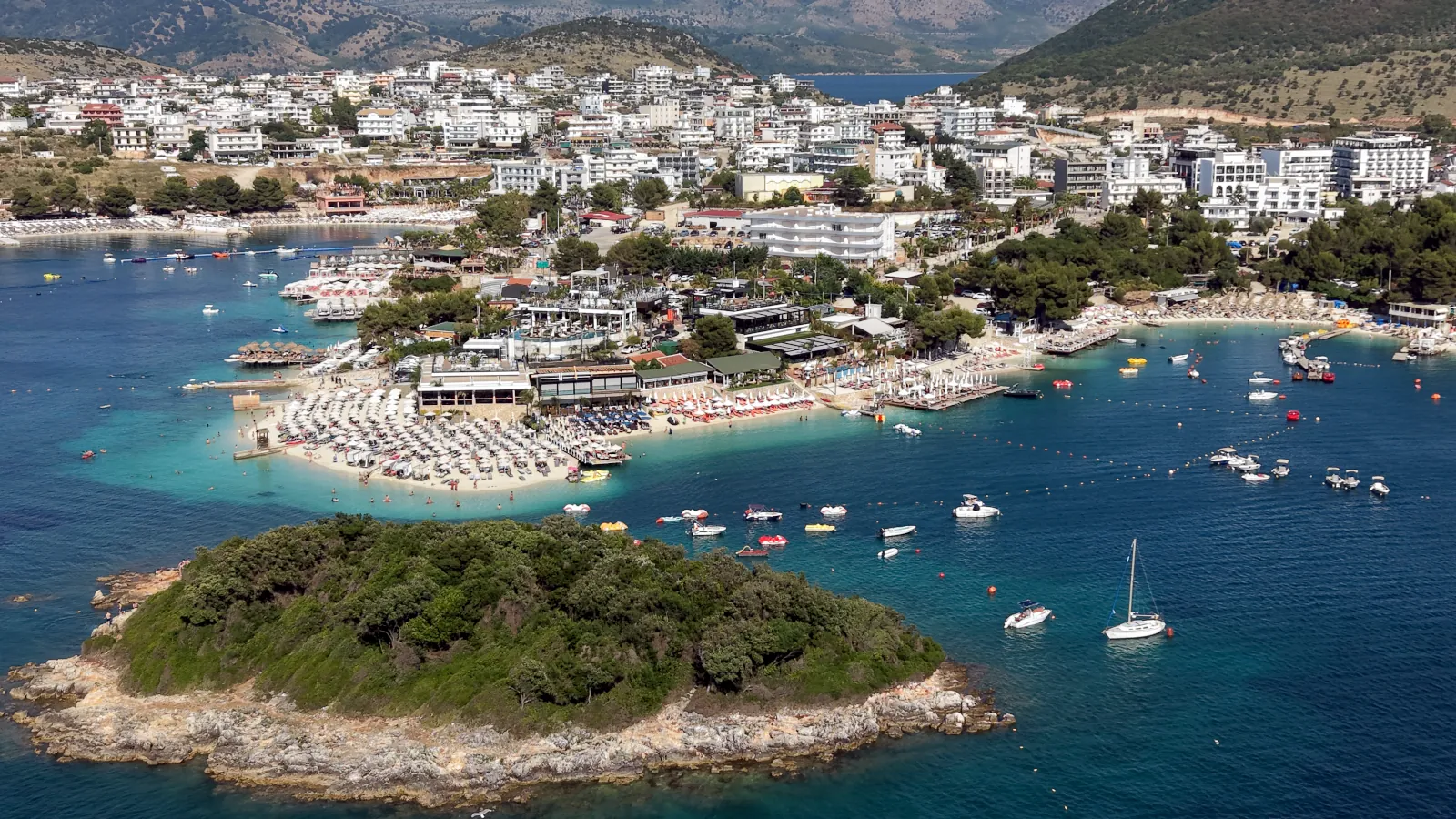
Driving north from Butrint, you will pass through Ksamil. For years, social media has branded this town the “Maldives of Europe.” We want to be honest: while the water is undeniably beautiful, the town is a hyper-commercialized resort trap.
We stopped here specifically for lunch. If you stay in the main tourist center, you’ll find loud music, crowded beach clubs, and expensive sunbeds. However, we found a hidden gem of a taverna located away from the main tourist strip, tucked between residential houses. We had some of the best mussels of the entire trip there for a fraction of the coastal prices. Our advice? Stop for a quick photo and an off-the-beaten-path lunch, but don’t expect a relaxing beach day—it’s just too overwhelming.
The Drive to Himarë
Leaving Ksamil, you merge onto the SH8 coastal highway. Make a quick pitstop at the Porto Palermo Castle.
- The Pilot’s Verdict: If you are a drone pilot, Porto Palermo is a fantastic stop for aerial shots. If you don’t have a drone and you’re arriving late in the day (when the castle is closed and the light is against you), you can safely skip this. We stayed in Himarë for two nights, choosing a private apartment with a sea view and dedicated parking rather than a hotel. It was a great decision—the view and the parking spot made the slightly “rougher” local apartment conditions well worth it.
Day 4: The High-Clearance Triumph on the Riviera
Today is the day you will thank yourself for renting a capable SUV. We dedicated this day to exploring the hidden, hard-to-reach bays of the Albanian Riviera.
Aquarium Beach (Gjiri i Akuariumit)
We started our morning by heading toward the secluded Aquarium Beach. The road here is definitely demanding—it’s not a route for a standard city car. We saw a few passenger cars parked nearby, but looking at the track, we wouldn’t recommend it for anyone without a high-clearance vehicle. Our Jeep handled the rocks and ruts well, making the “off-road” section an adventure rather than a chore.
- Our Experience: While we brought our snorkeling gear, the sea was quite rough that day. The strong currents meant there wasn’t much to see underwater, but that’s the reality of nature. We still think it’s better to bring your gear and not use it, than to have perfect conditions and be left empty-handed. Asia took a refreshing swim, while I enjoyed the sun and the raw atmosphere of the bay.
Lunch in Himarë & The Gjipe Beach Adventure
After our morning on the rocks, we retreated to Himarë for a fresh seafood lunch before heading to Gjipe Beach.
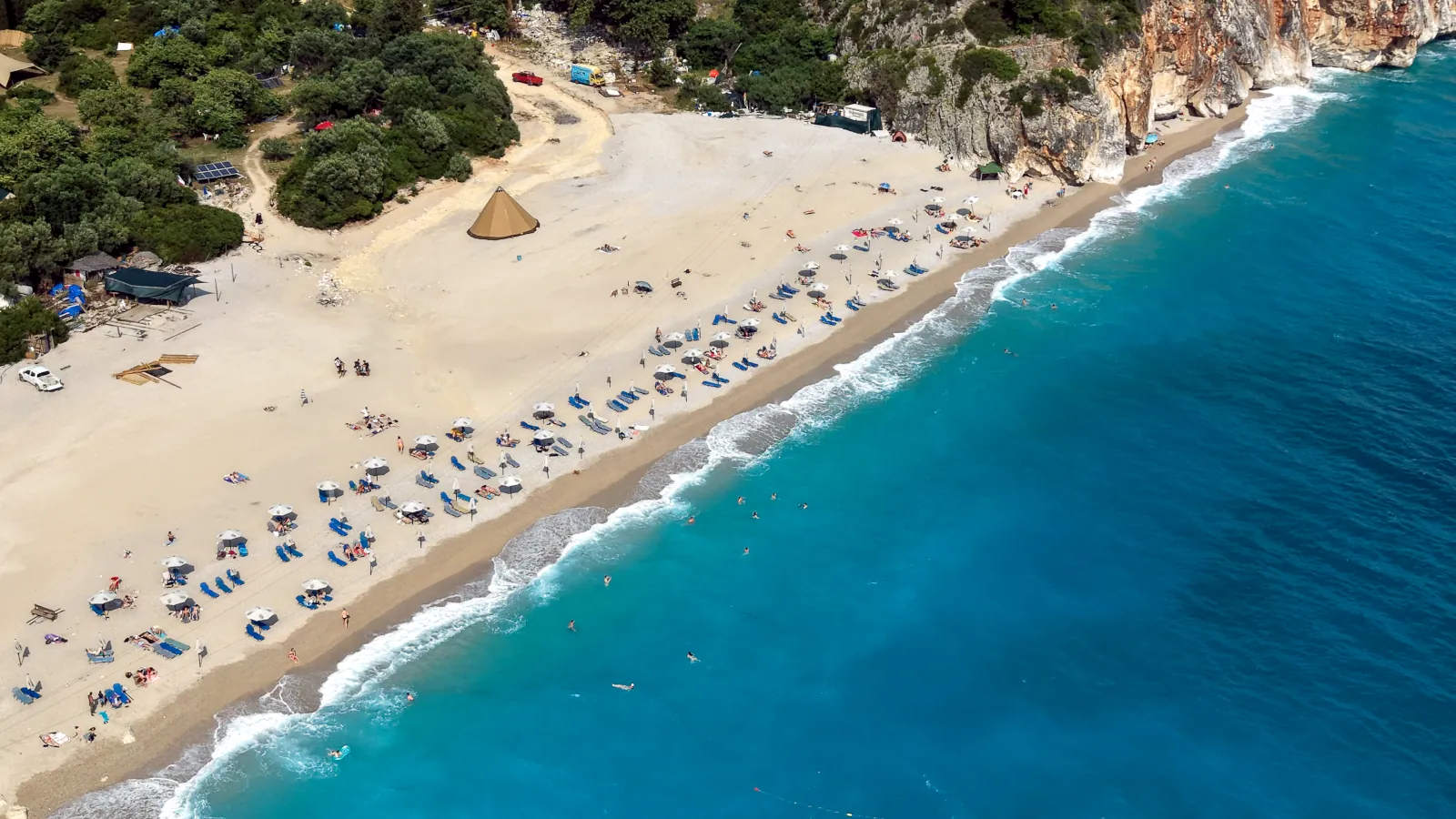
Gjipe is a stunning strip of white pebbles sitting at the mouth of a massive canyon.
- Logistics Update: The road to the parking lot is paved, but it is extremely narrow—only wide enough for one car. If you meet someone coming the other way, expect to do some reversing until you reach a passing pocket. Once you reach the parking lot (cost: 500 LEK for 0-12h), the road ends. The final 20-25 minutes down to the beach must be done on foot via a rocky, steep hiking path. Even if the road looked tempting to continue, do not try to drive it; it is in very bad condition, and only specific 4×4 vehicles from the local campsite/beach bars can safely make it down.
The Beach & The Canyon
The main beach area is clean, turquoise, and perfect for relaxing, so stick to the center of the bay. Avoid the far end near the campsite—you might spot some old scrap metal or discarded appliances there which ruins the view.
Instead of exploring that “junk” area, put your energy into walking into the mouth of the canyon. The walls are towering and spectacular. We met climbers there preparing their gear, and even a short walk into the gorge gives you an incredible sense of scale. It’s an “otherworldly” experience compared to the sunny beach, and those towering rocks are truly impressive.
- Our Tips:
- The Snorkel Rule: Always pack your mask, even if the sea looks rough. You never know when the current will change, and the rocky seabed here is full of hidden marine life.
- Parking: The 500 LEK fee for the parking lot is payable in cash—have it ready when you arrive.
- The Canyon Hike: If you are there, definitely take at least 15-20 minutes to walk into the canyon. It is a highlight experience compared to the sunny beach, and the towering rocks are truly impressive.
Day 5: From Coastal Clouds to Mountain Vistas
Today, we leave the coast behind, trading the Ionian waves for the rugged Albanian interior. This is a big travel day, but it’s packed with unique stops that turn a transit day into an adventure.
The Moody Llogara Pass
Leaving the Riviera, you will drive up the famous Llogara Pass, climbing to 1,027 meters above sea level. Usually, this offers mind-blowing views of the Ionian Sea. We, however, drove straight into a dense wall of clouds. We only saw the famous panorama for a few fleeting seconds through the mist. But honestly? The foggy drive through the dense, pine-scented forests was an unforgettable adventure. Nature is unpredictable, so enjoy the atmosphere regardless of the weather.
Vlorë: The Visual Surprise
Descending from the mountains, we took a stop at the Vlorë Belvedere Vänginz. It offers a panoramic view over the entire bay and the city. We loved it so much that we headed down to the Qendra Historike e Vlorës (the historic center). The streets are beautifully decorated, and we spent a perfect hour here sipping coffee and enjoying the architecture. It was easily the most visually pleasing city stop of our trip.
The “Imam Bayildi” Accident (Durrës)
As we transited north, we took a quick lunch break in Durrës. It was one of those classic “travel moments”: a young waiter was struggling to take our order, so a more experienced staff member stepped in to help us out. In the rush to look at the menu again, I accidentally pointed at the wrong dish—Imam Bayildi (traditional stuffed eggplant)—instead of what we originally planned to order. It turned out to be the best “mistake” of the trip; we had never eaten such perfectly prepared stuffed eggplant before, and it became an instant favorite. It’s a great reminder that sometimes, letting go of the plan leads to the best culinary discoveries. [VISUAL: A beautiful, vibrant photo of the Imam Bayildi dish served in a local tavern, with a blurred view of the street in the background.]
The Bovilla Lake Challenge
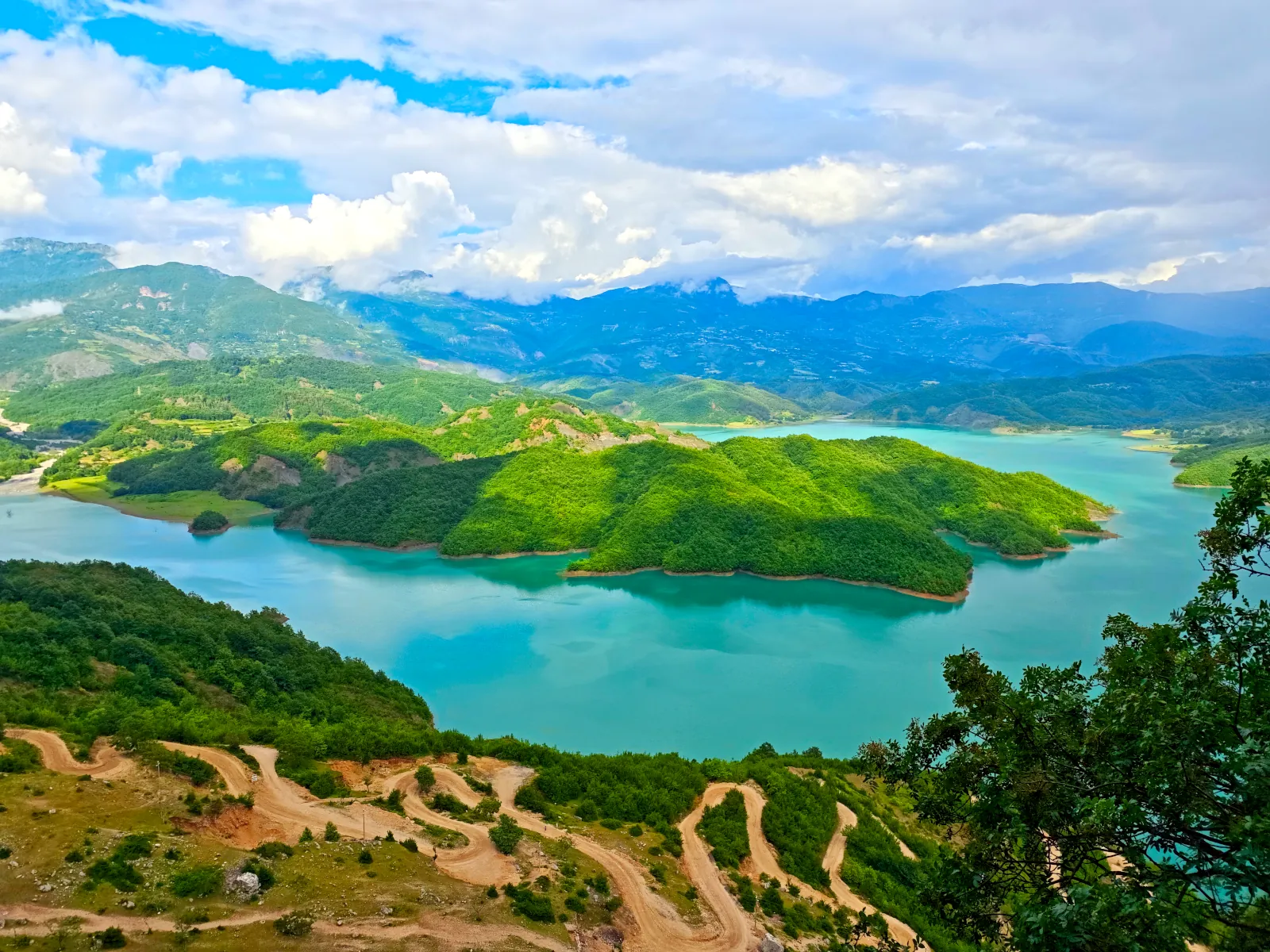
Finally, we headed inland toward Lake Bovilla, a stunning reservoir surrounded by jagged peaks.
- The Weather Strategy: Just as we arrived, a sudden rainstorm hit. Instead of risking the slippery drive or climbing in the mud, we used this as a “Smart Travel” opportunity: we sat in the Bovilla Restaurant overlooking the lake, enjoyed a coffee, and waited for the clouds to break.
- The Drone Hack: Once the rain stopped, we walked up to the Ballkoni Bovillë viewpoint. The light after the rain was perfect, and the air was crisp. We caught some of our favorite drone footage and photos of the trip, with the teal-green water looking incredibly sharp against the damp, dark rocks.
- Crucial Warning: The road up to the restaurant is brutal. You need high ground clearance. We saw inexperienced drivers in standard city cars struggling and spinning their wheels on the steep, rocky inclines. A diesel SUV with high clearance is your best friend here.
Evening in Krujë
We wrapped up the day by driving to Krujë, the historic home of the national hero Skanderbeg. We picked up some fresh supplies at a local shop and spent the evening in our apartment, simply resting and recharging after a long, intense day of driving.
Our Tips:
- Vlorë Hack: Don’t skip the old town center—it’s much more photogenic and polished than the busy port area.
- Bovilla Driving: If the weather looks shaky, park your car at the bottom and take a local shuttle or taxi if available. The last section of the road is the steepest and most challenging.
- Timing: Do not rush your mountain drive. Give yourself extra time—the views, especially after a storm, are meant to be enjoyed, not just ticked off the list.
Day 6: Shkodra & The Friday Traffic Hack
Start your morning in Krujë, the historic home of the national hero Skanderbeg.
- The Castle: Entrance to the Krujë Castle is free, and the view from the walls is surprisingly good. It’s a perfect spot for a quick morning wander without the pressure of an entry fee.
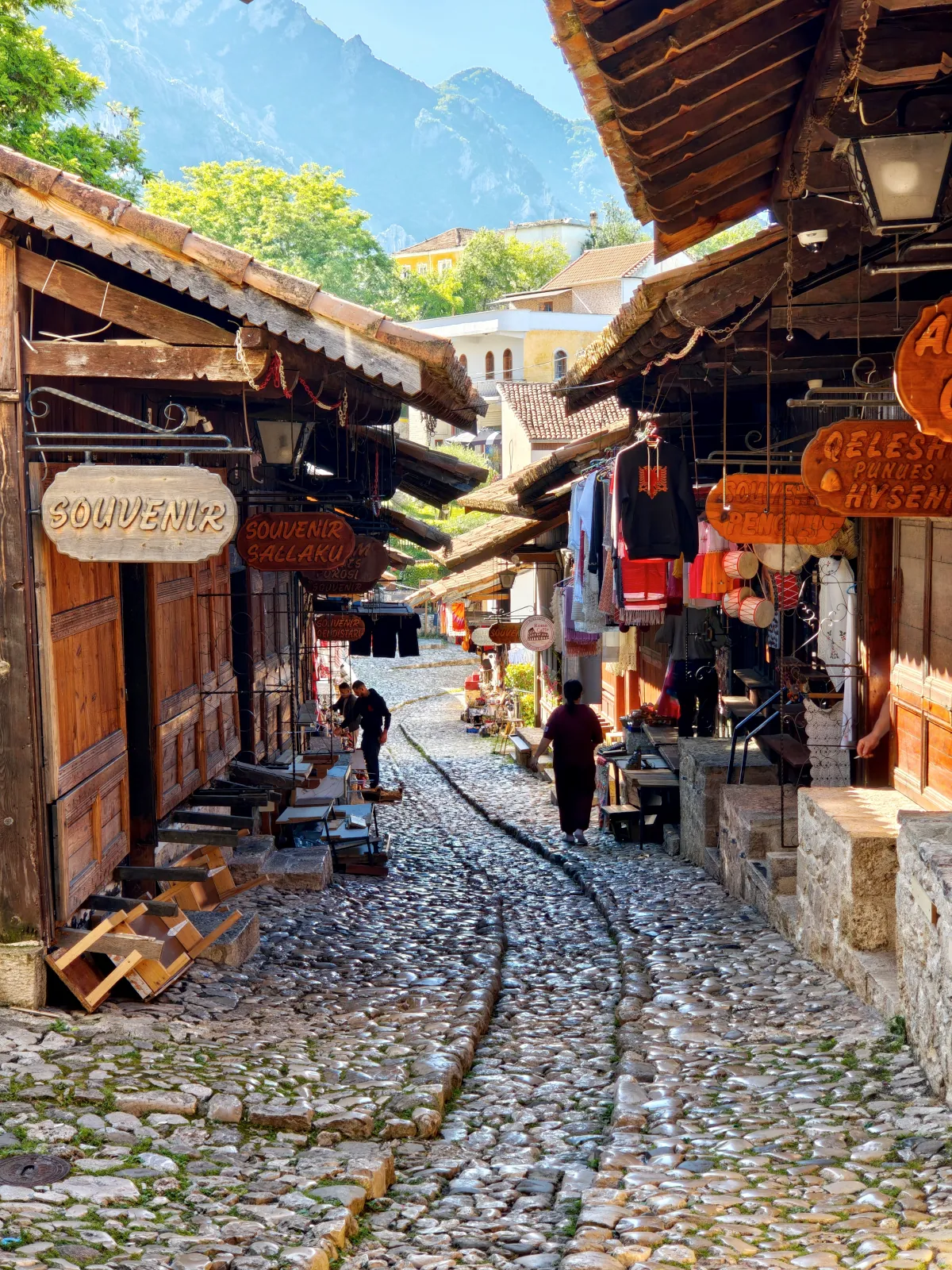
- The Bazaar: After the castle, spend some time in the beautifully restored Old Bazaar. It is arguably the best place in Albania to buy authentic souvenirs like hand-woven qilim rugs and local antiques.
Exploring Shkodra
After a short drive north, you’ll arrive in the “bicycle city” of Shkodra. We suggest starting with a coffee in the city center to soak in the atmosphere. Visit the impressive Abu Bakr Mosque and the nearby Englishman’s Clock Tower.
Take time to walk through the Gjuhadol district—it is a quiet, characterful part of the city that feels like a hidden slice of history. We stopped here for an excellent lunch; just a heads-up that, like in many local spots, card terminals can be unreliable, so keep your LEK handy. Only after lunch did we head toward Rozafa Castle.
- Logistics: We were lucky enough to find a free parking spot on the roadside just a few meters before the castle gate, which saved us a long walk uphill.
- Entry Fee: The castle entry is 400 LEK per person. To be honest, while the panoramic views of the rivers (Buna, Drin, and Kir) and Lake Skadar are absolutely unmatched, the castle itself is mostly outer walls and ruins. It feels a bit pricey compared to the free entry in Krujë, but the vista from the top is the main reason you are paying the fee.
The Friday Traffic Hack
If you plan to drive back toward Tirana on a Friday afternoon, do not leave between 15:30 and 18:00. This is when the SH1 highway turns into a paralyzing bottleneck as locals leave the capital for the weekend.
Instead, we used a “Smart Travel” hack. We didn’t rush to leave the region. We drove to the tiny, peaceful fishing village of Shiroka right on the edge of the lake. We spent the rush hour sipping a quiet coffee, watching the sunset over the mountains and the lake water. We didn’t hit the road toward our airport hotel until after 19:30. The highway was definitely not “empty”—there was still a steady flow of traffic—but it was a smooth, constant drive with zero stops or gridlocks, which made reaching our hotel near the airport totally stress-free.
Our Tips:
- Dining: If you are looking for local flavors, the Shkodra region is famous for Tave Krapi (lake carp baked in a rich sauce of garlic, onion, and dried plums). It’s a must-try for dinner in the Shiroka or Zogaj lakeside villages.
- Souvenirs: Krujë is the place to buy your souvenirs. The selection of rugs and antiques here is much better (and often better priced) than in Tirana.
- Navigation: While you are in the Shkodra area, keep an eye on your GPS—local routes can be tricky, but the main roads are well-signposted.
Day 7: Tirana – Brutalism, Capitalism & A Leisurely Finale
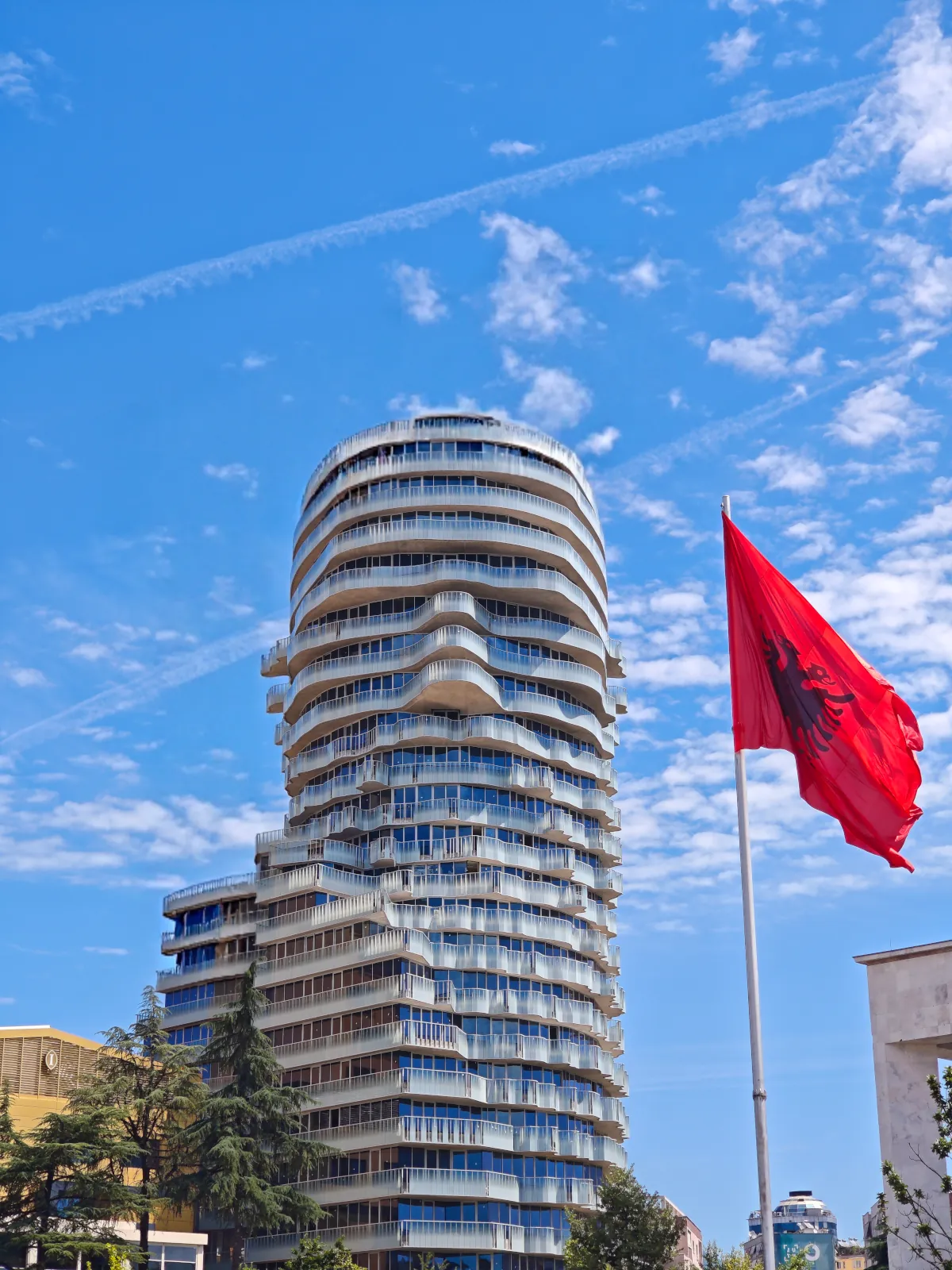
For your final day, dive into the chaotic, vibrant capital of Tirana. It is a fascinating city where grim communist brutalism crashes directly into colorful, modern capitalism.
Parking Strategy
We parked at the Tirana Parking – Stadiumi Dinamo facility. It’s a secure, easy-to-reach spot that costs 500 LEK for anywhere between 3 to 8 hours. Since we had plenty of time and wanted to finish our trip without rushing, this allowed us to leave the car for the entire day and explore the city comfortably on foot.
The “Smart Loop” Walk
We approached the city from the south, starting with a loop that covers the most interesting modern and historical layers:
- The Berlin Wall Segment & The Pyramid: Start your walk by seeing a genuine piece of the Berlin Wall—a stark reminder of the Cold War. Just nearby is the Pyramid of Tirana. Once a decaying concrete mausoleum, it’s been brilliantly revitalized into a modern tech hub. You can legally climb the stairs on the roof for a 360-degree city view.
- Architecture & Bridges: Walk toward the massive Mosque of Namazgah and continue to the charming Tanners’ Bridge (Ura e Tabakëve), a beautiful 18th-century stone bridge.
- Skanderbeg Square & Bunk’Art 2: Head into the heart of the city. We finished our walking tour at Bunk’Art 2—a fascinating, uncompromising museum built inside an authentic, underground anti-nuclear bunker once used by the Ministry of Internal Affairs.
- Price Warning: Note that prices have risen significantly. Entry is now 900 LEK per person (it was around 500 LEK just last year!). It’s a steep increase, but given the historical importance, it remains an absolute must-see.
Lunch & The Lake Finale
We grabbed lunch at a Turkish restaurant located inside the Tirana Castle (Kalaja e Tiranës) walls. It’s a cozy, pedestrian-friendly space filled with shops and eateries. Since we had a few hours left on our parking ticket, we walked to the Grand Park of Tirana. Walking along the lake provided a quiet, green finale to our trip before picking up the car and heading to the airport.
Our Tips:
- Don’t skip the bazaar: If you have time, walk through Pazari i Ri (New Bazaar). It’s vibrant and perfect for a quick snack of suxhuk sausages or qofte from the charcoal grills.
- Blloku District: If you have an extra hour, wander through Blloku. It used to be the elite communist district, but now it’s the most vibrant café and nightlife hub in the city. It’s the perfect place for a final specialty coffee.
- Airport Timing: On a Saturday, traffic from the center to the airport is usually manageable, but always leave at least 2.5 hours before your flight to account for security queues.
Plan Your Next Adventure: Explore our Atlas
If you enjoyed discovering these wild roads and hidden beaches, you’ll find even more inspiration in our dedicated destination hubs.
Check out our full [Destinations Catalog] to find your next unforgettable road trip across Europe. Looking for a similar Mediterranean vibe but with a different flavor? You might also love our intense [5-Day Puglia Road Trip] itinerary, or if you’re looking for island adventures, read our guide on [Scooter vs. Car: Smart Mobility in Europe].
Map
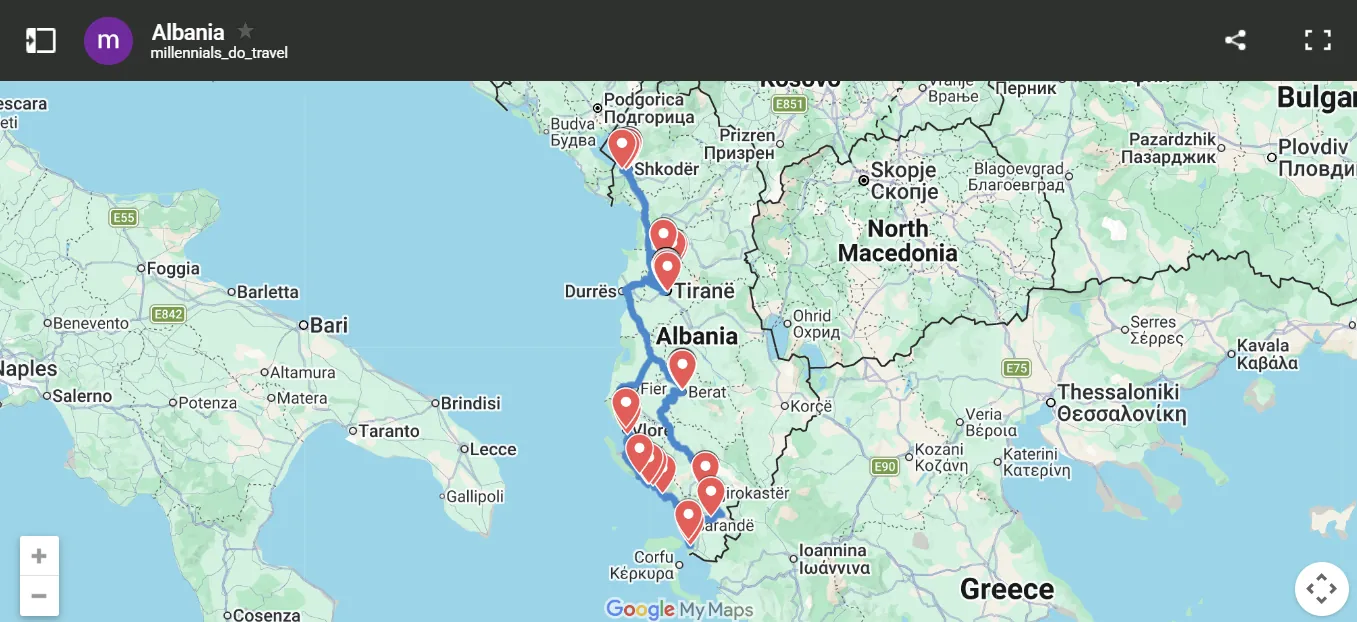
On the map beneath you can find all the spots mentioned in this 7-day Albania road trip and locate them easily e.g. on Google Maps.
For official cultural events, airport updates, and regional tourism information, check the [Official Albania Tourism] portal.